Youth Empowerment
Pakistan plans to put 500,000 internet-connected Chromebooks in the hands of talented students within two years. Here is what was announced, who it is for and why it matters for youth development.
Idea in Brief
The Situation
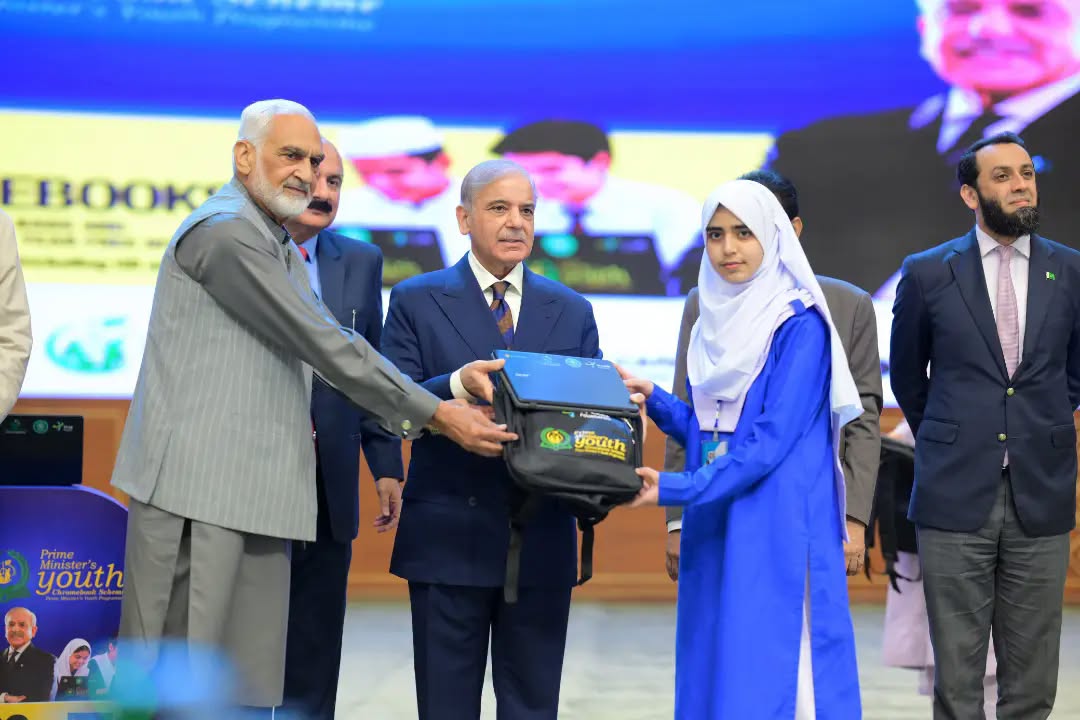
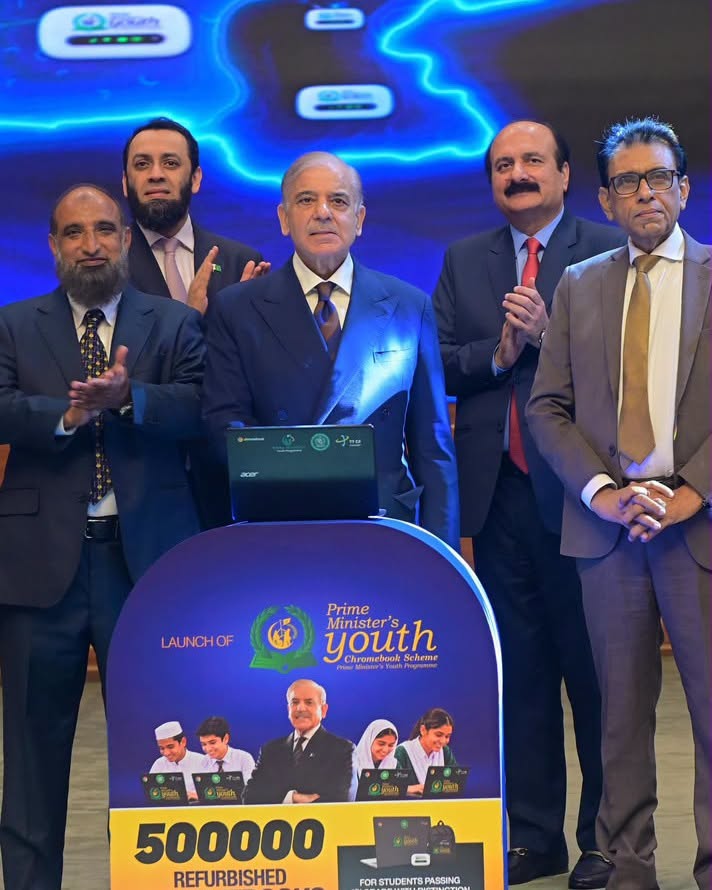
On 25 October 2026, Prime Minister Shehbaz Sharif launched the PM Youth Chromebook Scheme to give 500,000 Chromebooks with MiFi internet to deserving students on merit.
Why It Matters
Devices and connectivity unlock digital education, skills and jobs, and the scheme’s internet access is expected to reach an estimated 2.5 million people, including family members.
The Way Forward
Students should follow official updates on pmyp.gov.pk, keep their results strong and use the devices to build digital skills for further study and work.
When a young person in Pakistan gets a laptop and an internet connection, the change reaches far beyond one classroom. It opens online libraries, digital skills courses, freelance work and a link to the global economy. That is the bet behind the Prime Minister’s Youth Chromebook Scheme, launched in Islamabad on Sunday, 25 October 2026.
What Was Launched
Prime Minister Muhammad Shehbaz Sharif formally launched a nationwide initiative to distribute 500,000 Chromebooks, each paired with a MiFi internet device, to deserving students and high achievers selected strictly on merit. He said the devices would reach students within two years.
The prime minister described equipping young people with modern education and technology as a core responsibility of government and the key to a prosperous Pakistan. He stressed that poverty must not stand between talented young people and higher education.
Merit and Inclusion at the Core
The scheme is open to students from a wide range of educational backgrounds, including mainstream schools and madaris, with selection based on talent and hard work. The aim, the prime minister said, is to help students reach e-libraries and quality learning wherever they study.
Two top achievers were recognised at the ceremony: Syed Shams Raza, a student living in an orphanage whose father was martyred, and Alma Mahak Sabir, a student from a madrassah. Both received Chromebooks from the prime minister and thanked the government for recognising their hard work.
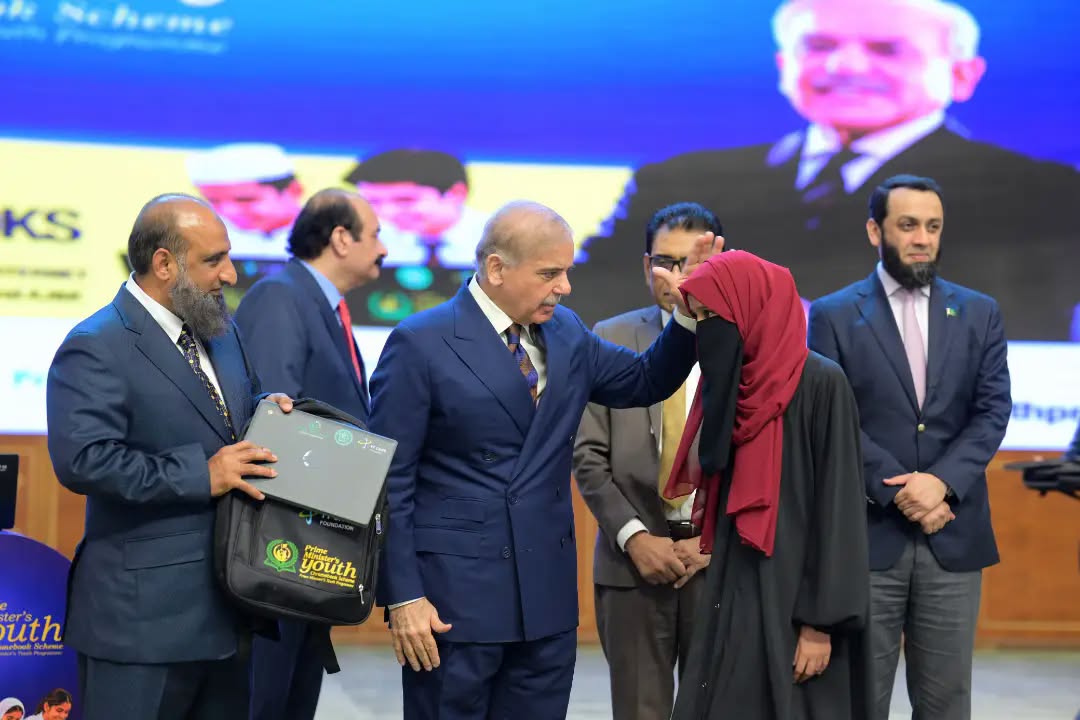
Poverty should not stand between Pakistan’s young people and higher education.
Faster Than Before
The prime minister recalled that earlier PML-N governments under Nawaz Sharif distributed about 600,000 laptops over a decade through the Prime Minister’s Youth Laptop Scheme, first launched in 2014. The new programme sets a target of 500,000 Chromebooks in just two years. He also noted that laptops from earlier schemes became a lifeline during the COVID-19 pandemic, helping students keep studying and earn a living.
Connectivity That Reaches Families
Because each Chromebook comes with internet connectivity, the benefits are expected to extend to students’ families. The prime minister said the scheme would reach an estimated 2.5 million people. For households where no one has had reliable internet before, this could be a first step into digital learning, banking and work.
The Voices at the Launch
Rana Mashhood Ahmad Khan, Chairman, PM’s Youth Programme
Rana Mashhood Ahmad Khan, Chairman of the Prime Minister’s Youth Programme, praised the prime minister’s vision of recognising young talent with the support of the overseas Pakistani diaspora. He called the initiative, with MiFi connectivity reaching an estimated 2.5 million family members, a major milestone in modernising education, and said renewed international confidence in Pakistan gives young people a vital window to excel in global innovation and technology.
Khalid Maqbool Siddiqui, Federal Minister for Education
The federal education minister said the government is working to raise Pakistan’s global standing by adapting to new trends in education. Turning the country’s youth into a productive national asset, he said, is essential so that the youth bulge drives progress rather than becoming a challenge.
Rashid Minhas, Chairman, Tokyo Technology Care Foundation
The prime minister thanked the Tokyo Technology Care Foundation (TTC) for partnering in the initiative. Its chairman, Rashid Minhas, said the memorandum signed with the government aims to help students become creators in the digital world and spark a national digital revolution.
Building the Wider Education System
The prime minister also pointed to growing education infrastructure, including the recent inauguration of a Daanish School in Islamabad and 27 more campuses under construction nationwide, designed to offer modern facilities and curricula. The ceremony was attended by federal ministers, parliamentarians, the Speaker of the Punjab Assembly, educationists, vice-chancellors, ambassadors and foreign guests.
Who Is Eligible?
Detailed criteria will be confirmed through official channels. Early reporting by ARY News said the scheme will be managed by the Federal Ministry of Education and Professional Training with the Prime Minister’s Youth Programme, and that the first phase targets the highest-scoring Grade 9 students. Students and parents should rely only on pmyp.gov.pk and mofept.gov.pk for registration, and never pay anyone to apply.
What It Means for Youth Empowerment and Youth Development
- Digital education: devices and connectivity make online learning, e-libraries and exam preparation possible outside the classroom.
- Digital skills and employability: a Chromebook is a gateway to freelancing, coding and the courses offered through the Digital Youth Hub, NAVTTC and training institutes such as CDLBM.
- Equal opportunity: merit-based selection across schools and madaris rewards effort regardless of family income.
- Family impact: connectivity reaching an estimated 2.5 million people spreads the benefit beyond the student.
For a fuller picture of the government’s youth agenda, read our explainer on National Youth Policy 2026 and our practical PM Youth Programme 2026 guide. Students who want to build experience alongside their studies can also explore youth volunteer opportunities in Pakistan.
Key People and Ministries in Youth Development
- Ministry of Federal Education & Professional Training: mofept.gov.pk · Federal Minister Khalid Maqbool Siddiqui
- Prof. Ahsan Iqbal, Federal Minister for Planning, Development & Special Initiatives: pc.gov.pk · Profile
- Attaullah Tarar, Federal Minister for Information & Broadcasting: moib.gov.pk · Profile
- Rana Mashhood Ahmad Khan, Chairman, Prime Minister’s Youth Programme: pmyp.gov.pk · Profile
- Rizwan Anwar, Special Representative to the Prime Minister’s Youth Programme and founder of Youth Revolution Clan: rizwananwar.com · LinkedIn · Instagram @rizwan_anwar_virk
Key Links
- Prime Minister’s Youth Programme (official): pmyp.gov.pk
- Digital Youth Hub: register at pmyp.gov.pk or download the app for Android and iOS
- PM Youth Laptop Scheme: laptop.pmyp.gov.pk
- Skills training (NAVTTC): navttc.gov.pk
- Higher Education Commission: hec.gov.pk
- Government of Pakistan: Prime Minister’s Office · National Portal · Ministry of Federal Education & Professional Training
- Rizwan Anwar, Special Representative to the PM’s Youth Programme: rizwananwar.com
- CDLBM (Centre for Digital Literacy and Business Management): NAVTTC-registered digital skills institute in Lahore, cdlbm.edu.pk
- Youth Revolution Clan: Get involved · Programs · Facebook
About the authors: This article was prepared by the Youth Revolution Clan editorial team. Youth Revolution Clan (YRC) is a youth-led nonprofit founded in Lahore in 2007.
YRC is not a government body. Programme details, dates and eligibility change; confirm on official portals such as pmyp.gov.pk.
Sources
- Radio Pakistan – PM formally launches Youth Chromebooks Scheme
- The Express Tribune – PM says poverty must not block education
- The News – PM Chromebooks scheme: 500,000 devices in two years
- Arab News – Pakistan vows to distribute 500,000 Chromebooks on merit
- ARY News – PM launches Chromebook Scheme for 500,000 students
- ARY News – PM Chromebook Scheme 2026 eligibility criteria explained
Youth Revolution Clan helps young Pakistanis build skills, volunteer and lead change in their communities.
Comments are closed