Youth Policy
From Daanish Schools in 2008 to a national youth policy in 2026, Prime Minister Shehbaz Sharif has built a consistent record of investing in young Pakistanis.
Idea in Brief
The Situation
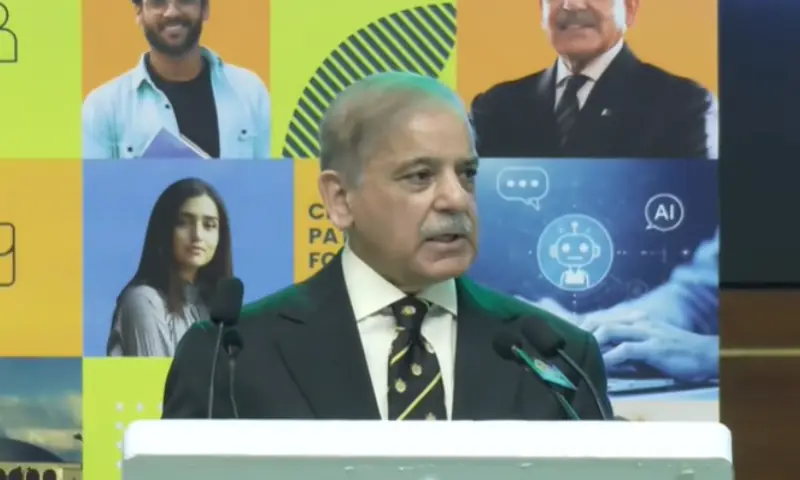
In August 2026, Prime Minister Shehbaz Sharif launched Pakistan’s first National Youth Employment Policy, and his cabinet approved a National Adolescent and Youth Policy covering people aged 10 to 29.
Why It Matters
Around 67% of Pakistanis are under 30. Turning that demographic weight into a dividend is the country’s central economic opportunity.
The Way Forward
A merit-based agenda of education, skills, technology and jobs, backed by budgets, new institutions and regular review at the highest level.
Many governments speak about young people. Few build a sustained record around them. Prime Minister Shehbaz Sharif’s youth agenda stands out because it connects promises made in 2008 with policies launched in 2026.
A Consistent Record
The foundations were laid during Mr Sharif’s tenure as Chief Minister of Punjab. In 2008 he began the Daanish Schools, designed to give talented children from disadvantaged backgrounds a high-quality education, and he backed the Punjab Educational Endowment Fund to support students who lacked financial resources. As prime minister, he extended this vision nationally through the Pakistan Education Endowment Fund, as the PMYP chairman recalled at the policy launch.
The same principle runs through his technology agenda. The prime minister said in August 2026 that 700,000 laptops had been distributed on merit, without recommendations, describing the scheme as a mission rather than a technology handout.
The future is not something you wait for; the future is something you build.
Pakistan’s First National Youth Employment Policy
On 12 August 2026, International Youth Day, Prime Minister Shehbaz Sharif launched Pakistan’s first National Youth Employment Policy in Islamabad. Rana Mashhood Ahmad Khan, Chairman of the Prime Minister’s Youth Programme (PMYP), called it a landmark commitment to the younger generation. The prime minister said young people need modern skills in AI, IT and science to compete with developed countries, and that equal opportunity in education and other fields is essential to Pakistan’s progress.
The measures announced were concrete:
- Merit-based AI and IT training in China for 1,000 young people, with costs covered by the government.
- 250,000 Chromebooks for high-achieving students this year.
- A new Daanish University in Islamabad, focused on technology and modern sciences, to begin teaching next year, with merit-based admission regardless of financial background.
- Expansion of Daanish Schools to less developed and remote areas.
- A National Power Sector Innovation Programme with Rs30 million in annual awards and Rs1 billion over three years.
- A target of at least 35% women’s participation in the labour force, and an annual Labour Force Survey for better data.
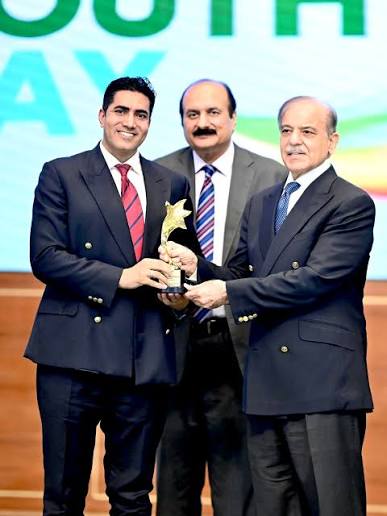
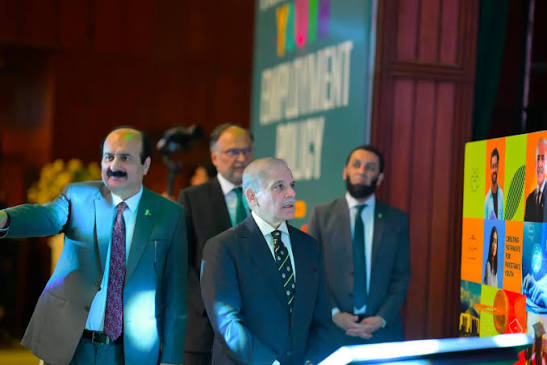
Mr Sharif tied the policy to Pakistan’s long-term future: the country was created by its elders in 1947, he said, but its youth will determine what it becomes by 2047. A child from a poor family, he argued, should have the same opportunity to a quality education as a child from a wealthy one.
A National Framework for Every Young Pakistani
On 20 August 2026, the federal cabinet chaired by the prime minister approved in principle the National Adolescent and Youth Policy, which Mr Sharif described as a significant step toward empowering youth. It is the first national framework to bring people aged 10 to 29 together under one approach, built on four pillars (education, employment, inclusion and environment) and two new institutions: a Pakistan Youth Development Council and a Federal Adolescent and Youth Agency. According to APP, it draws on 32,145 surveys and the views of more than 200,000 young people.
Money Behind the Mission
The 2026–27 federal budget allocates more than Rs5.59 billion to youth skills and internships, expanding skills training to 120,000 people and continuing the Ba-Ikhtiar Naujawan internships. A further Rs2.2 billion funds six PMYP initiatives, including the National Volunteer Corps, university e-sports arenas, the National Innovation Award and the Green Youth Movement.
Leadership from the Top
Policies succeed when leaders keep watching them. The prime minister has directed coordinated measures to create jobs for young people under the employment policy, with a monthly review meeting to monitor progress, the Express Tribune reported. That kind of attention from the top is what turns a policy document into results.
Carrying the Agenda to Young People
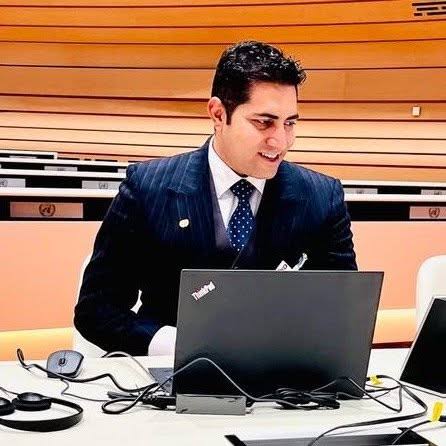
Delivering a national youth agenda depends on people who connect policy with communities at home and abroad. Youth Revolution Clan founder Rizwan Anwar, Special Representative to the Prime Minister’s Youth Programme, has represented the programme internationally, including at UNESCO Digital Learning Week 2026 in Paris, where he spoke on skills, digital literacy and AI, and at OIC Youth Capital 2025 in Marrakesh, where he presented the Digital Youth Hub.
What Young People Should Do Now
- Register on the official Digital Youth Hub at pmyp.gov.pk and keep your profile current.
- Read our PM Youth Programme 2026 guide to the laptop, skills, loan and volunteer schemes.
- Build experience through volunteering with organisations such as Youth Revolution Clan.
- Use only official .gov.pk portals for deadlines and eligibility.
Key Links
- Prime Minister’s Youth Programme (official): pmyp.gov.pk
- Digital Youth Hub: register at pmyp.gov.pk or download the app for Android and iOS
- PM Youth Laptop Scheme: laptop.pmyp.gov.pk
- Skills training (NAVTTC): navttc.gov.pk
- Higher Education Commission: hec.gov.pk
- Youth Revolution Clan: Get involved · Programs · Facebook
About the authors: This article was prepared by the Youth Revolution Clan editorial team. Youth Revolution Clan (YRC) is a youth-led nonprofit founded in Lahore in 2007.
YRC is not a government body. Programme details, dates and eligibility change; confirm on official portals such as pmyp.gov.pk.
Sources
- APP – Launch of National Youth Policy 2026
- Aaj News – Shehbaz unveils youth jobs and startup plan
- Pakistan Observer – PM unveils first National Youth Policy
- APP – PMYP chief on National Youth Employment Policy
- APP – Cabinet approves National Adolescent & Youth Policy
- Express Tribune – Youth policy to unlock demographic dividend
- Express Tribune – PM calls for effective measures to create jobs for youth
- Nukta – Rs5.59bn for youth skills training and internships
- APP – Rs2,200m for six PMYP initiatives
Youth Revolution Clan helps young Pakistanis build skills, volunteer and lead change in their communities.
No responses yet